This will be the final blog entry on participatory fandom. So, without further ado, let's get into it.
A phenomenon some fans take part in, and is present in nearly all fandoms, is 'shipping'. This is where fans take two characters from a favoured media text and entertain the idea that they are in a relationship or believe that they should be despite it not being canon to the original story.
A fan can present their interest in a 'ship' in the ways I have touched on in my previous posts, mainly through fanfiction and fan-art, but some fans also like to imagine scenarios between two characters in a more collaborative way and roleplay. Through doing these fan practices, they can find others who share their passion for a shipped couple, and/or express their passions in a creative way.
In the case of fanfiction, this is called 'slash' fanfiction and most stories dominantly feature around homosexual males, though authors tend to be heterosexual females. Any females in the fanfiction story or main text are marginalized or completely ignored. However, despite ignoring any characters that would get in the way of the ship these fanfiction writers are like any other, striving 'for a balance between reworking the series material and remaining true to the original characterizations.' (Jenkins 1992, p. 220). Shipping and 'slash' fanfiction is simply interpreting something differently in a media text, instead of simply accepting one dominant reading.
Mirna Cicioni suggests that slash fanfiction can be split into 4 subgenres. These are "first-time" stories, "virtual marriage" stories, "hurt/comfort" and nurturance stories, and sex scenes. (1998, p. 154) and from my own experience of reading slash writing on sites like FanFiction.net and Archive of our Own, I would deem this true. There is definitely patterns and categories which slash fictions can be divided into. What I also find sometimes, is very similar dialogue and bad writing habits, which is evidence of how fans have been influenced by each other.
Although the writing may be bit sub-par, it shows how fans have been inspired by their peers and desperately want to try and present their passions for a shipped couple also, and share it back with their peers. They may never be world class writers, but they are just as passionate of their works, have fun, and spend hours perfecting them, which is what makes a fan.
In this blog post, I have mainly touched on slash writing rather than the other ways of presenting a ship. This is because slash writing is the most significant way fans present their adorations for their shipped couples. It also constitutes 'a significant genre within fan publishing and may be fandom's most original contribution to the field of popular literature.' (Jenkins 1992, p. 188). References:
Jenkins, H. (1992) Textual Poachers. Great Britain: Routledge
Cicioni, M. (1998) ‘Male Pair-Bonds and Female Desire in Fan Slash Writing’, in Harris, C. and Alexander, A. (ed.). Theorizing Fandom: Fans, Subculture and Identity. New Jersey: Hampton Press.
Apologies that this blog post is a little late but this will be 2nd post looking into the participatory practices that fans take part in, roleplay and cosplay!
Roleplay
Roleplay is where fans impersonate one of their favoured characters of a media text and interact with others who do the same. It is typically done online via forums, social media, or email. Social media tends to be one of the more popular picks as fans can create profiles for their favoured characters and fully throw themselves into the role and make them seem more life like.
On Facebook you can find tonnes of roleplay groups dedicated to different fandoms, with hundreds or sometimes even thousands of members! These fans can post their muses that they would like to act out with a specific character or characters, and other fans impersonating a specific character mentioned may be interested in roleplaying that muse also. These two fans can then collaborate and create a new story via personal messaging with the characters from the original text with no boundaries and can let their imaginations run free.
This collaboration and the gratification gained from it, is different to that of roleplaying in person by LARPing and cosplaying. As there is less indication when roleplaying online that there is another person playing the character (except when talking out of character to plan). As Booth (2010) explains 'Offline we can tell the difference between a TV character and a physical person because of the scrren; one is mediated, the other is not.' (p. 161) In person, there is more constant awareness and more signifiers that the person is not actually the character. Especially if they are supposed to be an animated character where the body is 'squashed and stretched'.
Lots of fans also tend to be introverts and are shy or find it hard to socialise outside of the screen, especially with strangers. They are afraid of having their interests mocked. The cloak of anonymity level that fans can have from creating a character profile and joining groups online that share the same interests, gets rid of the anxiety and let's them breathe easily. For some, cosplay is just too outside their comfort zone
Participatory fandom is still a new aspect of new media that many, mainly older generations, find strange or struggle to understand, so it is sometimes looked down upon. Despite the idea of fandom being around for many years, the efficient level of participation and communication now possible with tools like web 2.0 and social media can be quite overwhelming to generations that simply did not grow up with this technology.
Cosplay
Cosplay is where fans dress up as their favoured character and can chose to act like them if they so wish. It is more well known than online roleplaying and there are now many spaces and opportunities that fans can go to, to take part in this type of participation, like comic cons and other conventions. This mode of participatory fandom is becoming increasingly more normalized and popular, with many families now choosing to attend events also. There are 'a sizeable number of people who have been active in fandom for most or all of their adult lives and who are now raising children who are active fans' themselves. (Jenkins 1992, p. 49)
(Cosplayer: Lauren Walker)
At these events, many fans from all sorts of fandoms and all over the world can come together and show their nerdy-ness. Meet-ups are organised for a different fandoms and fans can interact with each other in costume and character, take photos, or simply talk about their favoured media text. Many commercial brands have now jumped on this bandwagon and see it as a valuable marketing opportunity. However, with this rising commercialism and popularity comes some issues.
Some fans are starting to become deterred from going to big conventions like MCM London, not liking the amount of bustle that a niche interest of fandom normally provides, and rising prices to simply get into the conventions. Many are also not pleased with the rising elitism of cosplayers present in many fandoms.
This is due to the rising normalization. As fandoms get bigger, the fear of being mocked lowers and confidence rises. Unfortunately, some let it consume them. Though Hills (2002) suggests this is due to fan culture naturally being 'a social hierarchy where fans share a common interest while also competing over fan knowledge, access to the object of fandom, and status.' (p. 46). Nevertheless, there are still plenty of friendly fans and fandoms at conventions, and many fans are just looking to meet and interact with people who have the same interests.
References:
Booth, P. (2010) Digital Fandom: New Media Studies. New
York: Peter Lang Publishing.
Hills, M. (2002) Fan Cultures. Abingdon, Oxon: Routledge
Jenkins, H. (1992) Textual Poachers. Great Britain: Routledge
This will be the first in a series of posts on the different activities fans of anime and manga take part in to show their passions for their fandoms. This week I shall be talking about fan-art and fanfiction.
Fan-art and fanfiction are two activities plenty of anime and manga fans take part in, including myself. No, I'm not particularly great at drawing, digitally or otherwise but I do enjoy viewing and supporting my fellow fans translating their passions in such a creative way, and I have dabbled in writing a bit of fan fiction myself. Regardless if you have made a fan work for your fandom or not, if you read, enjoy, and support fan works of the stuff you love, you are part of a participatory fandom.
For those who are new to these terms, fan-art is (digital) artwork created by fans of any particular media text. These can be posted in specialized forums or on sites like Deviant Art and Zerochan. Sometimes you will even find fan-art of other fan works. Thanks to the tools now available to make your very own 'digitized artwork', fans are able to create things like badges 'or posters featuring their favourite persons or objects.' (MacDonald 1998, p. 150) by themselves if they wish, instead of buying expensive, official merchandise.
(The character Red from the Pokemon games drawn in the Japanese manga style with Pikachu. Credit: http://www.zerochan.net/2080264)
Fanfictions are fan made stories borrowing characters, and possibly settings, from a media text. These stories can be a reworked version of the original narrative, an expanded version or a complete new one. Fans can make their fantasies imaginative realities, focus on things the original media text may have not and change things they may not have necessarily liked in the canon narrative. (Canon meaning, what is determined legitimate parts of a story or narrative). Most of the time, fanfiction feature shipped and slashed pairings from a series, but I shall be talking about that in a later post.
On sites like Fanfiction.net, Wattpad, and Archive of Our Own, fans can share their stories and receive reviews and feedback. Which adds a whole new professionalism to writing fanfiction as fans use these online fan hubs to better themselves. Who knows where these young writers may end up? Jenkins (2006) says 'these young artists learn what they can from the stories and images that are most familiar to them.' (182), claiming that writing fanfiction is by no means just lazy copying of works, as some might think. E. L. James was a fanfiction writer and is now a millionaire thanks to her book, 'Fifty Shades of Grey' which was originally based off a fanfiction. Though granted, her writing is questioned by many.
Fans who are part of multiple fandoms may also try crossovers in their fan-art or fanfiction. This can be done in multiple ways. Using the characters from one series for a fanfiction retelling/adaption of another story is one way. For example, these Hetalia fanfictions based on Disney movies and classic fairy tales: http://iggycatcompleteusukfanfictions.blogspot.co.uk
Drawing characters from one series in another series' character's clothes/positions:
Fans are not aiming to steal anyone's work, just get more out of it, and are using or being influenced by media content to re-shape, share, reframe and remix it 'in ways which might not have been previously imagined' (Jenkins 2013, p. 2). Fan-art and fanfiction are uses of creative expression, and through these mediums fans show and share their adoration for the media text(s) they enjoy.
References:
Jenkins, H. (2006) Convergence Culture: Where Old and New Media
Collide. New York: New York University Press.
Jenkins, H. (2013) Spreadable Media: Creating Value and Meaning in a Networked Culture. New York: New York University Press.
MacDonald, A. (1998) ‘Uncertain Utopia: Science Fiction Media Fandom and Computer Mediated Communication’, in Harris, C. and Alexander, A. (ed.). Theorizing Fandom: Fans, Subculture and Identity. New Jersey: Hampton Press.
There is anime that has been adapted into video games, and there are video games that have been adapted into anime. In this blog post I shall be exploring how successful these different type of remediations are.
Video Games based on Anime
Let's start off with video games based off anime. Most of the time these do not get the best reception, which can be due to shoddy controls and a tight budget, or a lack of development and immersion in story and character that was present in the anime.
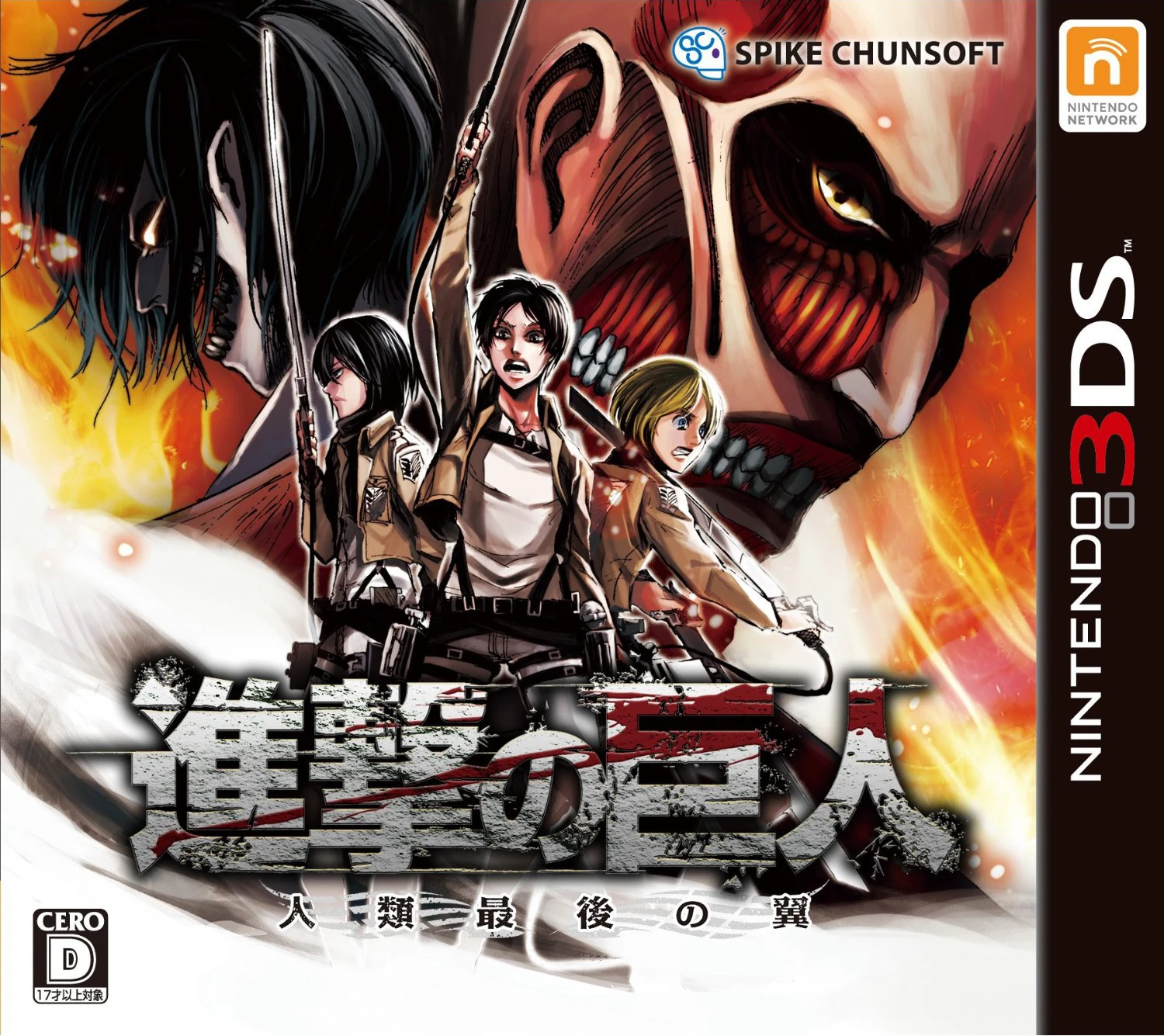
An example of an unsuccessful video game based off an anime is 'Attack on Titan: Humanity in Chains' for the 3DS (2015).
There's no denying that the anime of Attack on Titan was highly successful and popular, due to how unique its premise was compared to most apocalyptic anime. It was even enjoyed by those who do not typically watch anime. However, its 3DS counterpart hasn't done so well, receiving mainly negative reviews. Many choke this up to the limitations of the 3DS and claim it is simply not the most effective platform for housing the unique world which captivated us in the anime.
However, this way of remediation is not for naught. 'Digimon' is a series many of those born in the 90s grew up with, including myself, and its latest game instalment, 'Digimon Story: Cyber Sleuth' (2015/16) for the PS Vita and PS4 has been garnering some favourable reviews.
Not only is it on Sony's latest platform, but it also features older characters a player can play as. This is an important element included in recent games, so as to appeal to those who once watched Digimon. They are now grown and need a character they can relate to. Another part that makes this game so appealing to Digimon fans is that although there is a set story to follow, players are in complete control of how they play that story. I'm sure many who watched Digimon as a child, dreamed about having their own Digimon, and now they can, with a large variety to chose from.
Perhaps this is also where the Attack on Titan 3DS game falls and could have improved on, more player freedom and customization.
Anime based on Video Games
Moving onto anime based on video games. I shall be using the examples of 'Danganronpa' and 'Persona 4'.
Danganronpa was game series that started in 2010 on the PS Vita. It features amnesiac students, locked in a high school and forced to participate in a battle royal style, kill or be killed game ( 'mutual killing game') while they try to discover how they are in such a situation, the killer(s) in each round and the mastermind behind it all. In 2013 it was given a 13 episode anime release. However, many fans of the game, and critics were disappointed with how little time was given to develop the characters and events compared to in the video game. Considering the limitation of 13 episodes the anime had to work with and the complicated backstory behind Danganronpa, it is partly understandable why this could not be done as effectively as fans had hoped.
That said, for those who came to watch the anime without any previous knowledge of the video game, said they enjoyed it and it has a high score on most anime recommendation sites. The video game simply gave more depth to the story, which can be easily read into about online or lead people to playing the video game. So Danganronpa's remediation wasn't a complete failure and if anything, has been successful in boosting the original video game's sales.
Now, Persona 4 has been a little more successful with pleasing its fan base. 'Shin Megami Tensei: Persona 4' came out in 2008 for the PS2 and in 2011 it was given an anime release. Unlike Danganronpa, it was given a 25 episode run and centres around Yu Nurakami, who after moving to a new town discovers a distorted 'TV world' parallel to his own. With strange murders taking place in the town at the same time, Yu and his newfound friends, using the power of 'persona' decide to try and solve the mystery.
It has received generally good reviews and has been called an almost perfect adaption of the game. This is due to it not leaving out any plot points, while keeping the fun, lighthearted moments and it's focus on the development of characters, especially on the main character who in the video game, as the player character, is mostly silent and doesn't talk much. With more fleshed out characters, and the benefit of having a long episode run, 'Persona 4: The Animation' has been a successful anime adaption and remediation of it's video game counterpart and has no doubt also boosted the video game's sales.
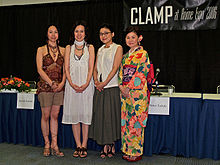
After a bit of a break for the Christmas holiday, my first post back shall be on the transmedia storytelling and splintered narratives within CLAMP's main productions. CLAMP is a small group of manga artists that have become rather renowned in the manga and anime world due to their unique style, artwork and story-wise. This is because today's technologies 'enable the development of original, independent transmedia narratives incorporating a wide variety of techniques' (Harvey 2015, 180).
There are benefits of creating splintered narratives and transmedia content like CLAMP does. Any additional content to a story gives greater depth and immersion to the audience within the world, or in CLAMP's case, many worlds. One world's point of origin (place where the roots of a story begin), can be another's point of departure (place where the main story begins) and characters from different stories constantly cross paths with each other.
Additional content can include but is not limited to:
- The fictional history of the world
- The background of characters and side characters
- The background of the environment/location
All of these things are present in CLAMP's main productions in its own way and I shall be covering each point individually, illustrating that CLAMP has chosen to focus on 'a particular strand of fandom that combines an attention to continuity detail with a refusal to speculate. (Clarke 2013, 87).
The Fictional History of the World
As mentioned before, CLAMP has many different worlds but claims they all belong to one universe. Some have dubbed this the 'CLAMP' universe as common themes seems to feature in each world and story, such as destined/fated partners and greater forces at work bringing people together. Magic and destiny are big themes in CLAMP works and seen in every one of their stories in some form or another.
In fact, it can be said that the character Yuuko Ichihara, 'the witch of dimensions', who appears in the xxxHolic series and Tsubasa: Reservoir Chronicle series (arguably CLAMP's most popular productions) acts as a conduit for the manga artists to explain how their worlds work. Her most famous quote being 'There is no such thing as a coincidence in this world. There is only the inevitable.'
The Background of Characters and Side Characters
A good example of this is Watanuki Kimihiro and Yuuko from the xxxHolic series. They occasionally appear in Tsubasa: Reservoir Chronicle but have their own series and backgrounds. This is the same for many characters that are met in Tsubasa in the other worlds the main characters visit.
Granted some are not necessarily the same versions that appear in their individual series, but it is important to note how the same couples/people are always together regardless. This being of course one of CLAMP's tropes.
(Touya and Akito as they appear in Cardcaptor Sakura)
(Touya and Akito as they appear in Tsubasa: Reservoir Chronicle)
The Background of the Environment/Location
As stated before, CLAMP has many worlds/different versions of a world in it's own storyworld universe, and each world is unique and has its own rules. This is most effectively shown in Tsubasa. Harvey (2015) claims that 'fantastic storyworlds afford frameworks which suit transmedial expansion, offering creators and fan-bases coherent ways of suturing together gaps or contradictions in narrative when they occur' (38).
Conclusion
CLAMP has been successful in establishing themselves and building a reputation even though they are a small company. This is due to them being unique in heavily utilising transmedia storytelling and splintered narratives within their manga and anime works. Clarke (2013) says 'we are increasingly caught in a world of media abundance where, texts themselves can no longer be pinned down to single objects, streaming from one to the next' (212). People who read CLAMP's works are fond of seeing familiar characters in another CLAMP series or get curious of a new character and go onto read their story next if the offer is there with the same familiar tropes, worlds and universe. This has been a successful and clever marketing strategy for CLAMP. References:
Clarke, M.J. (2013) Transmedia Television: new trends in network serial production. United States of America: Bloomsbury Academic
Harvey, C.B. (2015) Fantastic Transmedia: Narrative, Play and Memory Across Science Fiction and Fantasy Storyworlds. United Kingdom, London: Palgrave Macmillan
Having read all the current manga and watched all the anime for 'Black Butler', I will be talking this week about the remediation of this series from its graphic novel form to its audio-visual form. In this post I shall be exploring how things have been remediated from the manga of Black Butler to the anime adaption.
Art style
Within the manga, Sebastian's character design has been developed throughout the series. When you look at how Sebastian was drawn in the first volumes compared to the latest, there is clearly a difference and improvement. Volume 1 Volume 15
This type of remediation also happened in the Black Butler anime itself, it went through remediation when the art style of the characters from seasons one and two were re-vamped for the new Book of Circus and Book of Murder arcs, in order to try and be more loyal to the original art by Yana Toboso. Naturally when a manga is remediated into an anime, there can be some differences as the characters are re-drawn by animators. This can sometimes be drastic or noticeable (Season 1 and 2), but most of the time animators try to remain loyal as much as they can to the original character designs (new adaptions).
Ciel Phantomhive in Seasons 1 and 2
Ciel Phantomhive in Book of Circus and Book of Murder Bolter and Grusin (1999) note that animation remediation 'is both disrupting and extending the tradition' of animation (149).
Storyline
Most people consider the manga to be the on-going true story, as the anime deviated entirely after the curry arc and was written by someone other than Yana Toboso. An entire new season (S2) and story was even made with only new character designs being provided by Yana Toboso. Many people didn't like the ending, as it came to clear end when there was a lot more to explain. However now, with the new (story loyal) anime adaptions that have come out of other story arcs in the manga, the story lines of the second half of season 1 and season 2 can be seen as standalone, parallel story lines which are still enjoyable with the same base material and dynamics.
With the manga still on-going and remediations being made of other arcs, Book of Circus, Book of Murder, the upcoming ship arc film, etc. It is clear that A1-Pictures want to milk more money out of the popular series and have realized their error of trying to conclude the previous 2 seasons too early.
Conclusion
Anime and manga both have their pros and cons. While anime can be expensive to make and produce, I personally feel it is a more effective and emotive medium where a manga author's creations and imaginations can come to life. I don't think any of us can deny that it is satisfying to see your favorite manga characters animated and in colour rather than on just a black and white page. However, manga is by no means inferior. It is a lot more cost effective, hence why there is more manga than anime, and it normally continues a story further, providing a more fulfilling experience. It also typically covers things not present in the anime due to the limited episode run time and episode count agreed with the production company. As I've mentioned for Black Butler, sometimes things can also be changed from a manga, art or story wise, that might also put us off its anime adaption.
However, remediation from manga to anime is still an effective way of adding more depth and colour (literally) to a manga.
References:
Bolter, J.D. and Grusin, R. (1999) Remediation: Understanding New Media. United States of America: MIT Press
So! I have decided to make another analysis blog post and this time I will be looking at the 'Uncanny Valley' theory and how it relates to anime.
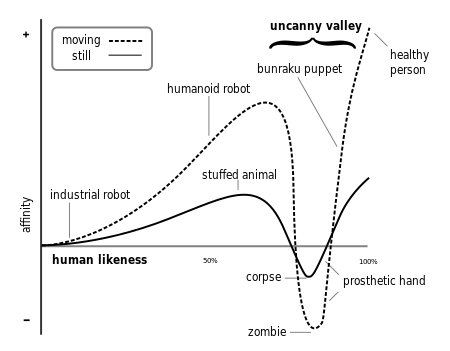
The uncanny valley concept was identified by Masahiro Mori, a Japanese roboticist in 1970. 'The theory of uncanny valley is the closer you approach to making something artificially human the higher the level of revulsion occurs in the human observing' (Chen cited in Menache, 2011, pg. 51)
Menache points out that 'our brains are so well trained to know what a human is supposed to look like that something as small as a twitch in the eye or the wrong dilation of a pupil can make it all seem strange' (2011, pg.51)
However, most anime the characters are unrealistic compared to real humans (e.g. big eyes and perfect bodies) and are normally 2-D animated, but for those who are not accustomed to the anime and manga style in general, they might not understand the appeal of characters looking in such a way (e.g. big eyes, small mouths) and so have an uncanny valley reaction.
Us anime and manga fans can also experience the uncanny valley reaction in different way.
There are some instances out there where we may see a character or characters in an anime or manga unappealing because of our expectations of how anime and manga characters should look. If they look vastly different from the norm then we can be disturbed. Here are some examples:
Episode 9 of 'Mekakucity Actors' got quite the reaction when the creators chose to animate the what was supposed to be a cute and heartwarming montage using CGI models, making the character faces look very wrong... The sequence was luckily reanimated into 2-D for the Blu-ray DVD version:
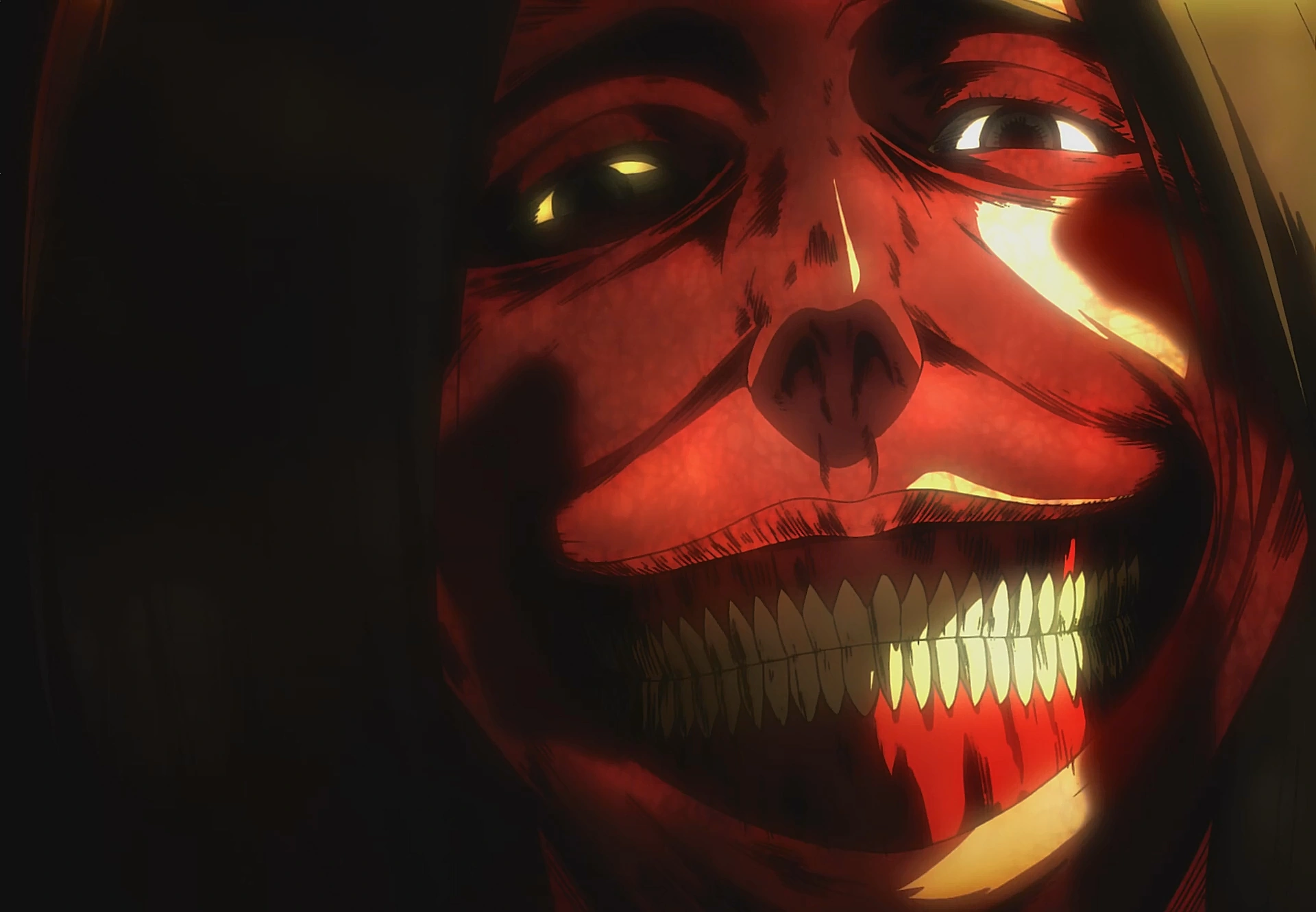
I think we can all agree we wouldn't want to encounter the titans in 'Attack on Titan' and the uncanny valley concept is used brilliantly here. The titans are deformed, humanoid monsters with creepy, cheerful smiles that never waver regardless of being blown apart or in the midst of devouring their victims:
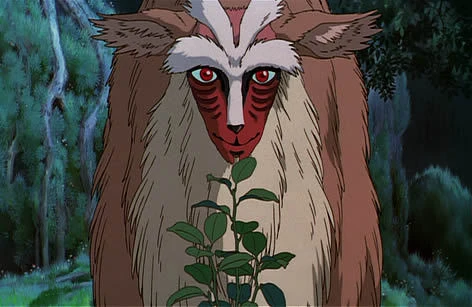
The Forest God in the film 'Princess Mononoke' is also an example. A deer with a vaguely human like face and intense, staring eyes instead of a normal deer head:
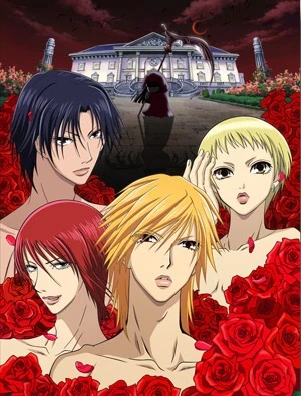
Finally for something a little more subtle. Many aren't a fan of the stylistic choice to make the lips of the male characters in 'The Wallflower' more obvious and realistic, rather than having the simple and single line lips we are used to in most anime and manga:
So, why do characters that look more human like creep us out? Angela Tinwell considers that 'A sense of dread of own one's death and morality have been intrinsically linked with the uncanny, so it may be that for a human-like character encapsulate what it means to be human, it cannot represent an ethereal immortality, but it too must be aware and contemplative of its own survival needs and inevitable death' (2015, pg. 200)
References:
Chen, J. cited in Menache, A. (2011) Understanding motion capture for computer animation. 2nd edn. Massachusetts, USA: Morgan Kaufmann
Menache, A. (2011) Understanding motion capture for computer animation. 2nd edn. Massachusetts, USA: Morgan Kaufmann
Tinwell, A. (2015) The Uncanny Valley in Games and Animation. Florida, USA: CRC Press
I have now confirmed character names and the name of my script: The Fallen Prince!
Naturally all these character names have a Japanese influence:
Main Character - Yutan (18)
Yutan’s friend/love interest - Sotsu (18)
Yutan’s fake mum – Kemoko
Yutan’s fake dad - Tefun
Yutan’s real mum (Previous Queen) – Queen Yura
Yutan’s real dad (Previous King) – King Naru
Evil Ruler (Current King) – King Heshiman
Cloaks
The next process I have is coming up with place and town names within Feressia. If anyone has any suggestions for names or ideas for towns and areas, I would love to hear them!
So after a hectic time of submitting the treatment for my script and filming at the same time, I've decided to take a little break from my script on here and post about something else. The anime music video 'Shelter'. Which is a collaboration between A1 - Pictures & Crunchyroll and DJs Porter Robinson and Madeon. It is a video which has been gaining popularity of late due to its interpretive story. On YouTube, it has now over 7 million views!
To those who don't know, Shelter tells the story of Rin, a 17-year-old girl who lives her life inside a futuristic simulation completely by herself in infinite, beautiful loneliness. Each day, Rin awakens in virtual reality and uses a tablet which controls the simulation to create a new, different, beautiful world for herself. Until one day, everything changes, and Rin comes to learn the true origins behind her life inside a simulation.
In this post I shall be mainly focusing on the level of immersion that Rin encounters in her virtual reality and the issues surrounding that but I shall briefly talk about spectacle.
What is important to note here is that the virtual reality technology itself isn't a spectacle to the girl, as she is aware that she is in virtual reality and knows its limitations. To us, who are still very much fascinated by the idea of virtual reality technology, it is still a spectacle. The places Rin creates are new to her every time, filling her with wonderment every time she explores them. In other words, she is deeply immersed in each world and the fact that she can explore and touch things in these different worlds is a spectacle to her.
This reality and possibility of creating things (e.g. our own worlds) in virtual reality and becoming fully immersed in them, isn't a far off possibility now. Granted, thanks to technology such as the 'Oculus Rift' and 'Samsung Gear VR' we are already able to go into created worlds, but becoming fully immersed in them is a different story. For example, two of the things that can destroy the illusion of being fully immersed is the chunky headgear that can give you a neck ache if on for too long or make some people feel motion sickness (also known as 'cybersickness'), and the lack of ability to feel things that you can touch in virtual reality. These things are being worked on of course, but we still have quite the way to go until we reach the level of immersion Rin has in Shelter. 'Virtual reality is immersive, which means that it is a medium whose purpose is to disappear. This disappearing act, however, is made difficult by the apparatus that virtual reality requires.' (Bolter and Grusin 2000, pg. 21-22)
However, Rin isn't able to escape from her virtual reality. She can neither, eat, sleep, or move which renders her helpless. When we see her in space at the end of the video, one has to wonder if she is even living anymore. Unlike Rin, we are able to escape from virtual worlds when we chose but if it gets to the level of immersion Rin has, there is an issue of people possibly wanting to stay in their own paradises and shun the real world and reality, to never return and become detached from real life. This is already apparent with what the Japanese like to call 'NEETs' (people Not in Education, Employment, or Training) or 'Hikikomori'.
While they may see this addiction as ideal for themselves, it will become a detriment to them in the end and destroy their immersion, as we are shown by Rin's loneliness in the video. She has no one to talk to and the memories of why she is in virtual reality in the first place cause her greater pain and loneliness. Rin, as of yet, has no one to detach her from the virtual reality in the real world. In the future, if people are alone in the real world while lost in the same level of virtual reality, they may also lose the ability to escape like Rin. Instead of their virtual reality being a place to escape to, it will become a lonely prison.
Of coarse, people could always create their own people to talk to within their virtual reality, but then the only friends people might have are fake, NPCs who don't feel genuine emotion towards them but have been programmed to respond and behave in a certain way. As humans, we crave and need human contact to keep our sanity.
But then again, what's the point of escaping virtual reality if things are bad in the real world anyway? As the name of video suggests, virtual reality is a shelter for Rin from the lonely and depressing reality outside, Earth has collided with another planet and has seemingly been destroyed.
It must be noted that the idea of virtual reality becoming a safety net and safe place for people can still be a benefit and therapeutic. As we see at the end of the video, the message Rin receives and the technology she has been given by her father keeps her hopes up for the future and she thanks him for that. 'Understanding the psychological implications, both positive and negative, is critical.' (Scarborough and Bailenson 2014, pg. 140)
References:
Bolter J. and Grusin R. (2000) Remediation: Understanding New Media. Cambridge, London: MIT Press
Scarborough J. and Bailenson J. in (2014) The Oxford Handbook of Virtuality. Edited by Mark Grimshaw. New York, United States of America: Oxford University Press.
Here I am with my next update, and this time it's about character names for our heroes and other main characters! Using the helpful site http://www.rinkworks.com/namegen/ I have managed to come up with some ideas for more fantasy sounding names. Of course with a Japanese twist.
Welcome to my Script Project and Anime Analysis Blog!
I am here to give you an insight into the developments of my script and story and provide some analysis into some forms of new media that are present in the Japanese anime and manga industry.
Due to my extremely keen interest in Japanese animation, my script will be written as an animation and if it were to ever be made, I visualize it being animated in the same way as any other anime film.
Synopsis: Alan has been living a secluded life in the forest with his parents all his life. When his father dies of illness and his mother is seemingly murdered by an organization known as 'The Cloaks' he vows revenge. Fueled by revenge and reluctantly accompanied by another young man, Levi, who used to be associated with The Cloaks, he sets out on an adventure in the struggling kingdom of Feressia and discovers new emotions, encounters, truths, and love? With a new overwhelming power developing inside of him, can he control it or will it consume him?
NOTE: Names and minor plot details could very likely change and will be updated if so. I am also looking for any name suggestions for the title of the story itself. If you have any, please share them here!